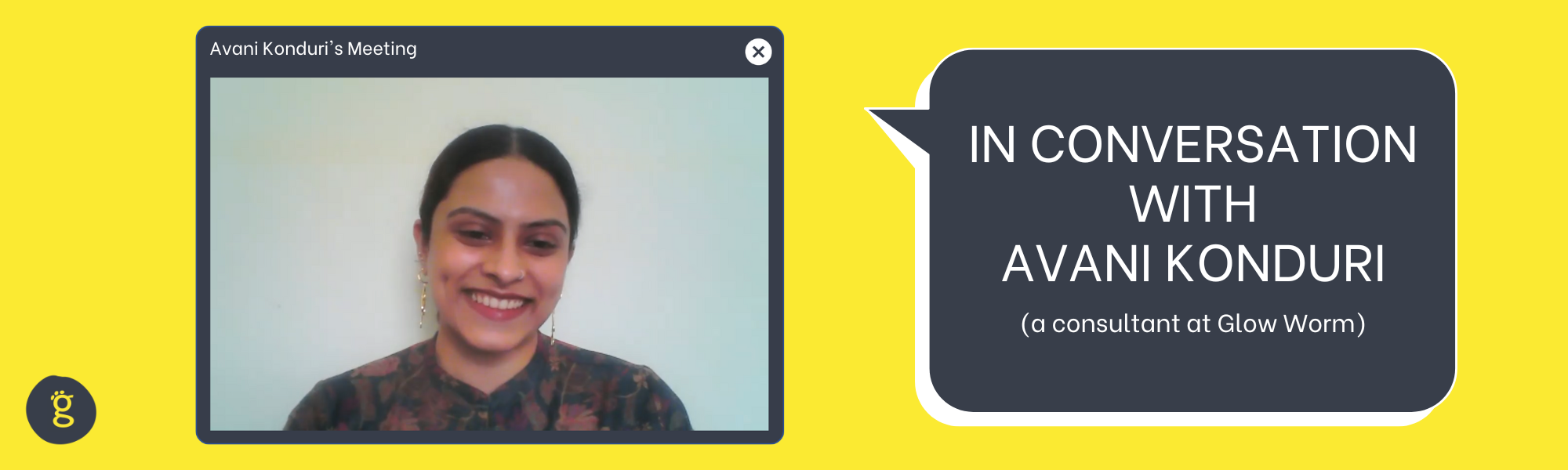
Our storyteller, Komal Srivastava, sits down with Soumya from Growth & Excellence at Glow Worm to talk about the world and work of OD.
In Chapter 1, Soumya took us on a fascinating exploration of the different hats she dons at Glow Worm Company and why she believes organizations must leverage an OD lens.
As we step into Chapter 2, Soumya shares insights into how she goes about making herself at home within the different systems she works with:
As an OD consultant, you are never fully internal to any client system that you work with, and every client has different values, contexts and ethos. a. How do you go about making yourself at home within the different systems that you work with?
Your question reminds me of something I came across in my first week at Glow Worm – the concept of the self as an instrument. Whenever you are in any interaction or conversation, you’re in it. You’ve already influenced it and created some impact. But you’re right, especially while working with clients we’re never fully internal. I’m using the term “fully internal” because I also think the way we (at Glow Worm) work with clients, we’re actually a very trusted party.
To make myself at home within different systems, I focus on a few key strategies. Firstly, I try to understand the organization’s context. I gather information from their website, LinkedIn, what’s being said in the press about them, and other sources. Just doing basic research from the resources that are readily available to me
Secondly, I ask a lot of questions. Often, our clients come in with perceived problems, but it’s essential to dig deeper and define the real challenges. Spending time with clients to define the problem is absolutely key. Don’t assume that what’s being stated as the issue is indeed the core issue. Instead, ask questions and form a complete picture.
It’s important to understand the client’s perspective, but it’s equally important to deeply engage in acquiring all the information you can.
The cause and effect diagram is another helpful tool. It helps me analyze what are the immediate, medium-term, and long-term impacts of what we’re saying and/or proposing.
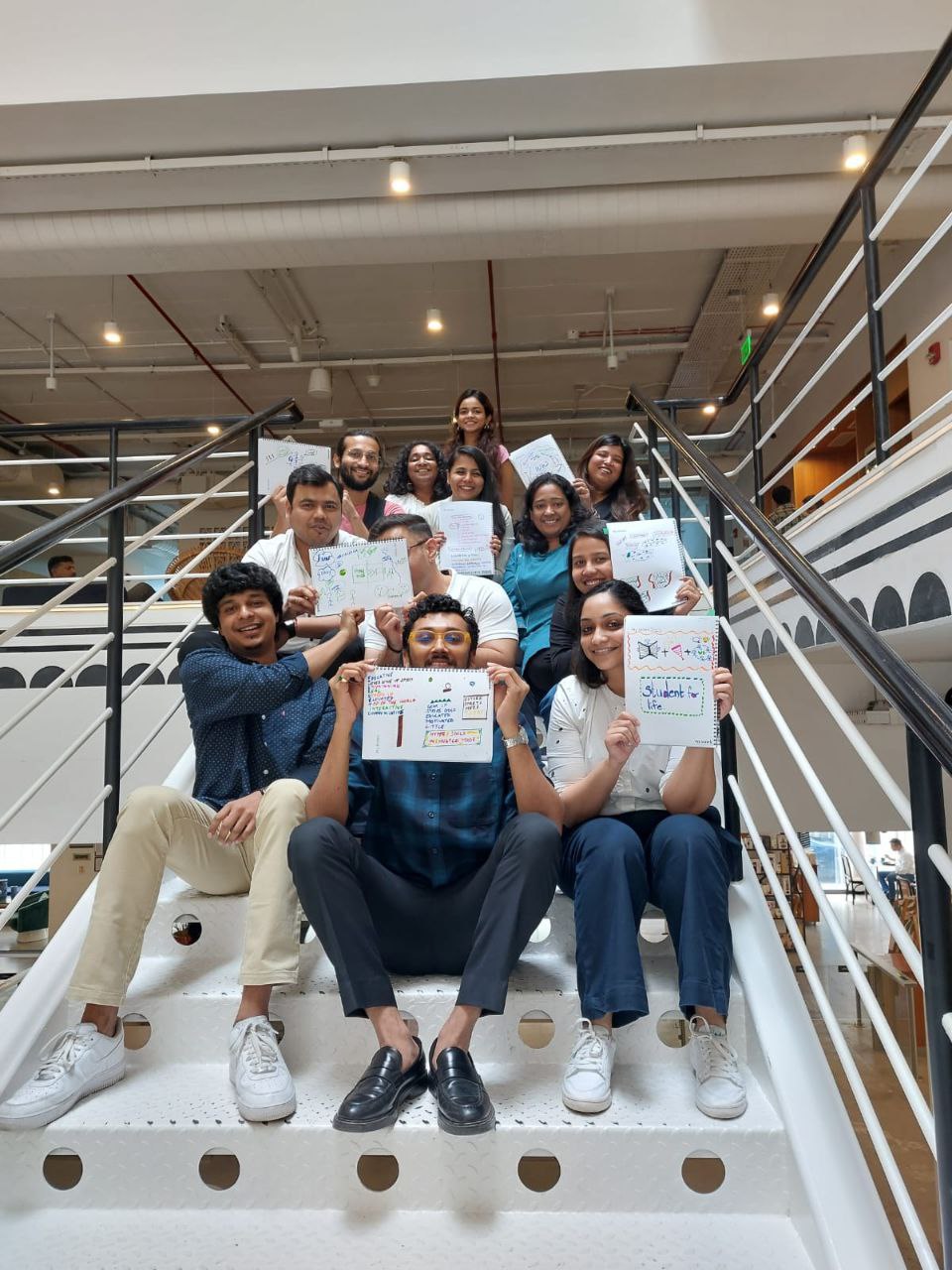
Soumya with Sales Facilitators at WeWork India
Regular debriefs with the team are essential too. We discuss what happened during calls and we share our observations from the interactions to stay aligned and informed.
Lastly, building strong, trusting relationships across the organization is key. Whether with the primary sponsor or the HR team, fostering these connections provides a broader understanding of the organization. I also believe in sustaining these relationships beyond the scope of the project, as it helps transform the relationship into a partnership based on trust, not just a transaction.
And how does this change when we bring regional and local cultural differences into the mix?
The general principles don’t change. For instance, when I’m interacting with a person who was in a training session and who might not be very familiar with the language I’m speaking. So, of course it will impact how I build relationships with them, but it’s still important that I build a relationship with them.
Again, goes back to researching the context. What am I learning and understanding about the regional and cultural differences? What is appropriate and inappropriate? How can I be mindful about the questions I ask and don’t ask? How do I bring all of these into the building of my relationships? That’s important.
During a recent field visit, we were intentional about what to wear, considering the norms of the client organization and the region. Over time, this awareness becomes more ingrained, and we naturally adapt to the local customs without much conscious effort.
Managing the balance of local norms and organizational norms is important because you want to be a part of the system; we want to be a neutral observer and not stand out. The minute people start seeing us as outsiders, it can hinder the authenticity of our interactions.
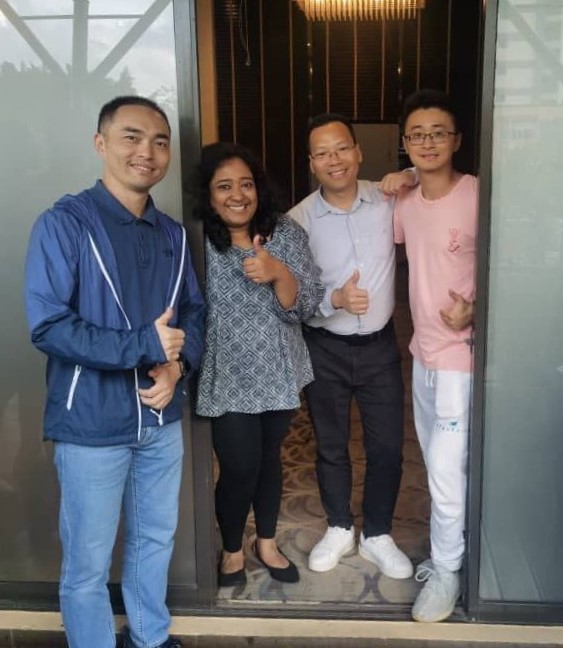
Soumya with Leadership Foundations alum from Sun King, China
Even being intentional about simple gestures goes a long way in building rapport and trust. We always learn a few words from the other language before we go to a new place. Something as simple as how do you say “hello” or ask basic questions in another language. I also research a lot about what are some of the foods people eat in the region I’m visiting. What I’ve found very interesting is trying to find similar foods. For instance, I remember once I was having a conversation with a client and they were telling me about a dish they eat in their culture and I shared a very similar variation of the dish that’s popular in my culture, and that became such a fun bonding moment! I think it really fills people with joy when they can see you put in effort.
What is one shift you would invite leaders to make in the way they think about shaping the future of work?
If you look at how the world has changed—from the industrial economy to the service economy and now the knowledge economy — it’s clear that people are at the core of it all. I think at the center of it is the humanness of the economy. And that’s what we (industries, organizations, people) really need to focus on.
So, there are two parts to this shift. First, how can we ensure that we are building and leveraging human potential?
I believe that when we focus on making people the best versions of themselves, our organizations will naturally thrive.
And secondly, we’ve got to embrace complexity. Think of the absolute rapid pace of technology development, about how the climate and world politics are right now and how that’s going to impact your organization. So much of it is interconnections across global systems. And, we should absolutely not shy away from that complexity!
Both your research and your practice are guided by your passion for creating impact, implementing sustainable solutions and enabling scale. What do you think organizations miss out on, when they do not leverage an organization development approach?
Often, the biggest and most complex problems in the world arise when attempts are made to solve one part of an issue without considering how it might impact other interconnected elements of the system. Instead of addressing problems in silos, the OD lens allows for a holistic view, enabling organizations to see the system as a whole and understand the interdependencies between various elements.
By not leveraging the OD lens, organizations also fail to recognise that they are fundamentally driven by people.
Organizations are not made up of floor plans and real estate; they’re built and created by people. When I think of the OD lens, I consider three critical elements: purpose, process, and people. When organizations neglect this perspective, they don’t realize the profound impact that the alignment of these factors can have on attrition, service quality, and overall performance. Instead, they end up getting stuck in a cycle of fixing one problem after another.
To truly understand organizations, we need to start looking at them as societies of interconnected human beings. As soon as we bring the human lens in, we’ve brought the OD lens into it.
If you enjoyed reading this, stay tuned for Chapter 3!